English

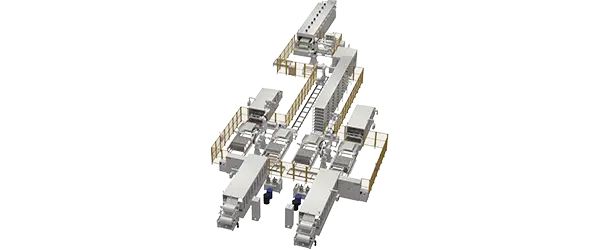
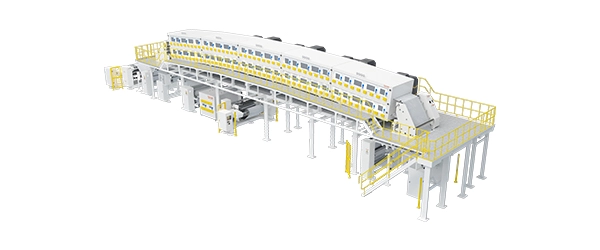
A roll to roll coating machine is widely used in lithium-ion battery electrode production to continuously apply electrode slurry onto metal foil. Instead of processing individual sheets, the system moves a continuous web of copper or aluminum foil through coating, drying, and rewinding stages, making it suitable for scalable and consistent electrode manufacturing.
For battery manufacturers, roll-to-roll technology offers more than continuous operation. Stable web tension, controlled coating thickness, slurry delivery, drying capacity, and line speed must work together to achieve repeatable electrode quality. The equipment therefore needs to be selected according to both electrode specifications and overall production requirements.
FST Global provides battery manufacturing equipment solutions for pilot and production-scale applications, including equipment for electrode preparation and coating processes.
A roll to roll coating machine is continuous processing equipment that unwinds a flexible substrate from a roll, applies a controlled coating, processes or dries the coated web, and rewinds it for subsequent manufacturing.
In lithium-ion battery production, the substrate is generally a metallic current collector. Cathode slurry is typically applied to aluminum foil, while anode slurry is typically coated onto copper foil.
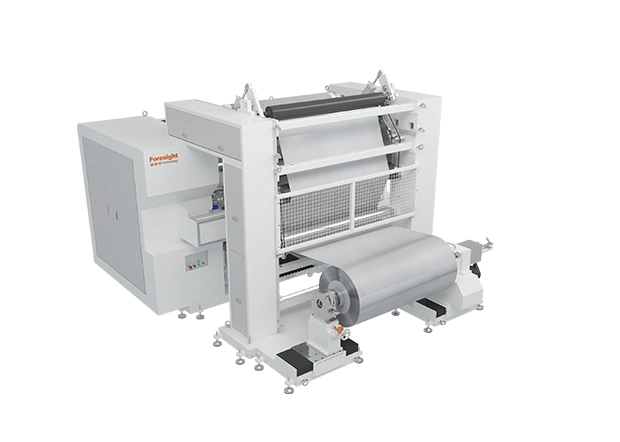
The machine needs to transport these relatively thin foils through the coating line while maintaining suitable tension and alignment. A typical system therefore combines unwinding, web handling, slurry feeding, coating, drying, and rewinding functions.
Unlike sheet-by-sheet processing, roll-to-roll operation enables long lengths of electrode material to be processed in a coordinated production flow. This makes the technology particularly relevant when manufacturers need repeatable coating over extended production runs.
The roll-to-roll battery coating process continuously transfers prepared electrode slurry onto moving current collector foil before drying and rewinding the finished electrode web.
A typical process includes:
Unwinding: Copper or aluminum foil is released from the supply roll and fed into the coating line under controlled tension.
Slurry coating: Prepared electrode slurry is deposited onto the moving foil according to the required coating width, pattern, thickness, and loading.
Drying: The wet coated electrode passes through controlled drying zones to remove the liquid carrier.
Web control: Tension and alignment are maintained as the foil moves through different machine sections.
Rewinding: The dried electrode material is collected into a roll for downstream processing.
The exact battery coating process depends on electrode formulation, cell design, coating technology, and production requirements. Process parameters therefore need to be established for the specific material system rather than transferred directly between different electrodes.
Continuous coating can improve battery electrode production by combining scalable web processing with controlled material application and repeatable process conditions.
Important advantages include:
Higher production efficiency: Long foil webs can move continuously through coating and drying instead of requiring repeated handling of individual sheets.
Consistent process control: Stable operating parameters can support uniform coating over longer production runs.
Automation potential: Web transport, tension, coating, drying, inspection, and rewinding can be integrated into a coordinated system.
Reduced manual handling: Continuous processing limits repeated movement of individual electrode sheets between process stages.
Scalable manufacturing: Roll-to-roll configurations can support the transition from pilot production toward larger manufacturing volumes.
However, continuous coating does not automatically guarantee electrode quality. Higher web speeds can increase demands on slurry delivery, drying, tension control, and inspection. Manufacturers should therefore balance productivity with process stability.
Roll-to-roll coating quality depends on the interaction between slurry properties, coating parameters, web tension, line speed, drying conditions, and equipment stability.
Slurry consistency is particularly important. Changes in viscosity or material distribution can affect how slurry flows through the coating section and how evenly it is deposited.
Web tension must also remain controlled. Excessive or unstable tension can influence foil transport, alignment, and coating position. Because battery current collectors are thin, reliable web handling is an important part of machine design.
Drying must then be matched to the amount of wet coating and production speed. Increasing line speed without sufficient drying capability can create an imbalance between coating output and solvent or water removal.
A suitable battery coating machine should therefore be evaluated as an integrated system. Maximum coating speed alone provides limited information about actual production performance.
Roll to roll coating machines are primarily used during electrode manufacturing before calendaring, slitting, and cell assembly.
The technology can support cathode and anode production for different lithium-ion cell formats, depending on machine configuration and electrode requirements.
After coating and drying, the electrode roll typically proceeds to calendaring, where electrode thickness and density are further controlled. It can then be slit into the widths required for downstream cell manufacturing.
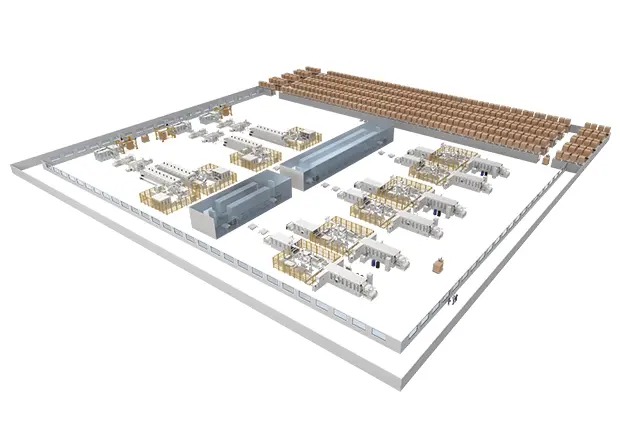
Roll-to-roll processing can be applied in pilot lines as well as higher-volume production. Pilot equipment may prioritize flexibility and easier process adjustment, while production equipment generally requires higher throughput, automation, repeatability, and integration with quality-control systems.
When selecting equipment, manufacturers should consider coating width, target loading, foil specifications, slurry characteristics, production capacity, drying requirements, and downstream compatibility.
FST Global supports customers in configuring battery manufacturing equipment according to electrode specifications and planned production processes.
A roll to roll coating machine enables lithium-ion battery manufacturers to process continuous electrode foil through coating, drying, web handling, and rewinding stages. Its main value comes from combining scalable production with controlled and repeatable electrode processing.
Successful operation depends on much more than line speed. Slurry properties, coating accuracy, foil tension, alignment, drying capacity, and downstream production requirements must be coordinated throughout the line.
For manufacturers planning pilot or larger-scale battery production, FST Global provides battery manufacturing equipment solutions designed around different electrode processes and capacity requirements.
It is equipment that continuously transports a flexible web through coating and related processing stages before rewinding the finished material.
It enables continuous electrode foil processing and can support scalable, automated, and repeatable battery electrode manufacturing.
Cathode slurry is generally coated onto aluminum foil, while anode slurry is generally coated onto copper foil in conventional lithium-ion manufacturing.
Important factors include slurry properties, coating parameters, web tension, alignment, line speed, drying conditions, and equipment stability.
Yes. Roll-to-roll systems can be configured for pilot production as well as larger manufacturing lines, depending on required flexibility and capacity.
Buyers should evaluate electrode materials, foil dimensions, coating width and accuracy, production speed, drying capacity, automation, web control, and downstream process compatibility.
This is the last one.