English

Choosing the right lithium battery manufacturing equipment is essential for building a stable, efficient, and scalable battery production process. From electrode and separator preparation to cell assembly and final testing, different manufacturing stages require specialized machines with precise control over coating, tension, dimensions, cleanliness, and material handling.
Modern battery factories increasingly depend on automation because materials such as copper foil, aluminium foil, and separator film are thin and sensitive to process variation. A suitable lithium battery making machine therefore needs to provide more than production speed; repeatability, quality inspection, process stability, and integration with upstream and downstream equipment are equally important.
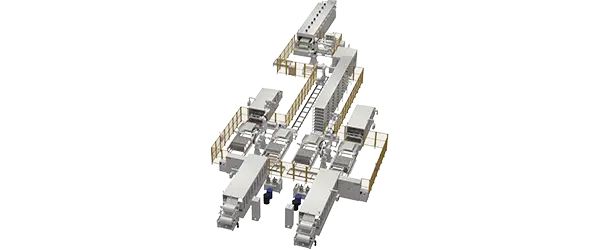
Foresight Tech develops intelligent battery manufacturing equipment for lithium-ion battery material processing, with solutions covering separator coating and precision slitting of separator, copper foil, and aluminium foil.
Lithium battery manufacturing equipment includes specialized machines for electrode processing, separator preparation, cell assembly, electrolyte filling, formation, testing, and material handling.
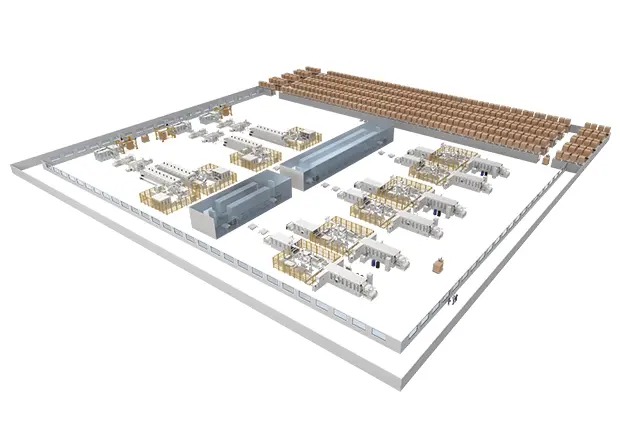
Battery manufacturing is not completed by one machine. Instead, multiple systems work together to transform raw materials into finished battery cells. Electrode manufacturing generally involves mixing, coating, drying, calendaring, and slitting. Separator production may require coating and precision slitting, while cell manufacturing adds winding or stacking, tab welding, packaging, electrolyte filling, and sealing.
After assembly, cells normally enter formation, aging, electrical testing, and grading processes. Automation and inspection systems may also be integrated throughout the factory to monitor product quality and improve traceability.
Because every production stage has different precision and material-handling requirements, lithium battery manufacturing equipment should be selected according to the specific process rather than treated as interchangeable machinery.
Different lithium-ion battery production stages require different equipment because electrode preparation, separator processing, cell assembly, and final testing involve distinct manufacturing conditions.
| Production Stage | Typical Equipment | Main Process Focus |
|---|---|---|
| Electrode preparation | Mixing, coating, drying and calendaring machines | Coating consistency and material uniformity |
| Material converting | Copper foil, aluminium foil and separator slitting machines | Width accuracy, edge quality and tension |
| Cell assembly | Winding/stacking, welding and packaging equipment | Positioning accuracy and cleanliness |
| Electrolyte processing | Filling, vacuum and sealing equipment | Filling consistency and sealing quality |
| Formation & testing | Formation, aging and grading systems | Electrical performance and cell consistency |
Among these stages, coating and slitting directly influence the condition of materials entering subsequent processes. Uneven coating can affect product consistency, while poor slitting may introduce burrs, particles, wrinkles, or unstable roll edges.
Foresight Tech focuses on intelligent equipment for these critical material-processing stages. Its solutions include separator coating equipment as well as precision slitting systems for battery foils and separator materials.
Battery coating machines control the application of functional materials onto battery substrates, while assembly equipment converts prepared electrodes and separators into battery cells.
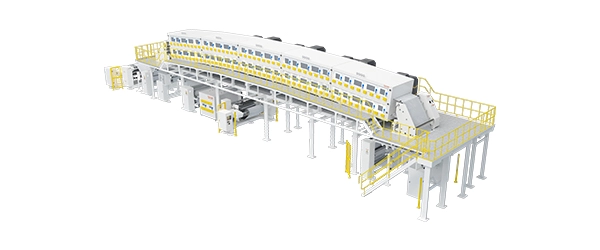
A coating machine must maintain stable web movement while controlling coating thickness, drying conditions, tension, and surface quality. For separator manufacturing, coating uniformity is particularly important because irregular coating can influence downstream processing and product performance.
Foresight Tech's intelligent lithium-ion battery separator coating equipment supports roller coating, spray coating, and spot coating, giving manufacturers flexibility for different separator processes. The production system also integrates web handling, drying, inspection, and intelligent control functions.
After coating and material converting, assembly equipment performs processes such as winding or stacking electrodes and separators, tab welding, packaging, electrolyte filling, and sealing. Although these machines perform different functions, their production quality depends heavily on the consistency of upstream processed materials.
This is why selecting lithium ion battery manufacturing equipment should be approached as a complete process decision. A high-performance assembly line cannot fully compensate for unstable coating or inaccurate foil slitting.
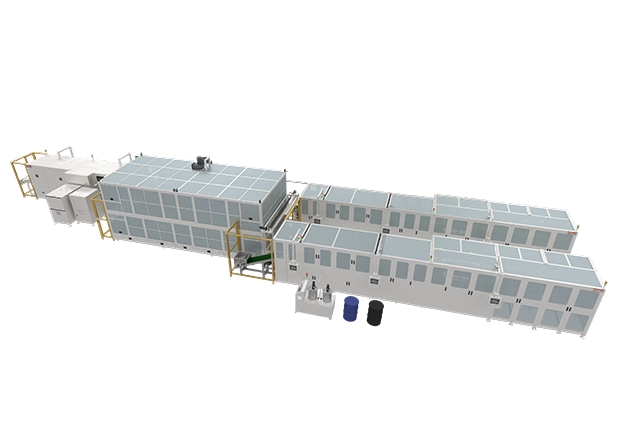
For electrode converting, Foresight Tech also provides an intelligent copper foil slitting machine designed for precision processing of thin battery materials.
Selecting lithium battery manufacturing equipment requires manufacturers to evaluate material specifications, production capacity, process accuracy, automation, and integration requirements together.
Before purchasing equipment, battery manufacturers should focus on several practical factors:
Material and process compatibility: Confirm substrate thickness, width, coating requirements, roll dimensions, and finished product specifications.
Precision and consistency: Evaluate coating stability, slitting accuracy, tension control, edge quality, and rewinding performance.
Production capacity: Match mechanical and production speed with realistic factory output rather than selecting equipment based only on maximum speed.
Automation and inspection: Consider defect detection, automatic adjustment, recipe management, alarm functions, and production data collection.
Factory integration: Determine whether the equipment can communicate with upstream and downstream machines and future intelligent manufacturing systems.
The correct battery manufacturing equipment should also allow room for future capacity expansion and process changes. This is particularly important as battery designs, materials, and manufacturing requirements continue to evolve.
For aluminium electrode material processing, Foresight Tech's intelligent aluminium foil slitting machine provides another example of process-specific equipment designed around thin-material handling and precision slitting requirements.
Selecting the right lithium battery manufacturing equipment ultimately depends on how well each machine fits the actual production process. Manufacturers should evaluate equipment as part of an integrated production system rather than comparing isolated specifications. By combining stable coating, accurate slitting, automation, inspection, and process control, battery producers can improve consistency while supporting higher production efficiency. Foresight Tech provides intelligent equipment solutions for critical lithium-ion battery material processing applications.
Typical equipment includes mixing machines, coating and drying systems, calendaring machines, slitting equipment, winding or stacking machines, welding systems, electrolyte filling equipment, sealing machines, and formation and testing systems.
A lithium battery making machine performs one or more specific manufacturing processes, such as coating electrodes, slitting foil, assembling cells, filling electrolyte, or testing finished batteries.
Coating equipment controls how active or functional materials are distributed across battery substrates. Stable coating helps maintain consistent material properties for downstream manufacturing.
Slitting equipment converts wide rolls of copper foil, aluminium foil, or separator film into narrower rolls while controlling width, edge quality, tension, and rewinding consistency.
Manufacturers should compare material compatibility, process precision, production capacity, automation, inspection capability, equipment integration, and after-sales technical support.
Foresight Tech provides intelligent lithium-ion battery manufacturing solutions focused on separator coating and precision slitting equipment for separator film, copper foil, and aluminium foil.