English

A lithium battery making machine is used to support different stages of lithium-ion battery production, from electrode preparation and cell assembly to testing and final packaging. Because battery manufacturing involves multiple tightly controlled processes, the equipment used at each stage can directly affect production consistency, efficiency, and product quality.
For manufacturers planning a new line or upgrading an existing facility, choosing the right equipment requires more than comparing machine speed. Battery format, production capacity, automation level, process accuracy, quality control, and compatibility with other equipment should all be considered.
FST Global provides battery production equipment and manufacturing solutions for customers requiring different process configurations and production capacities.
A lithium battery making machine is specialized equipment used in one or more stages of lithium-ion battery production, including electrode processing, cell assembly, formation, testing, and packaging.
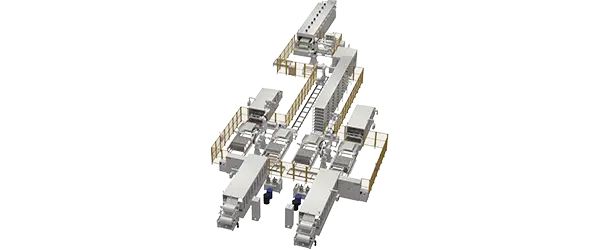
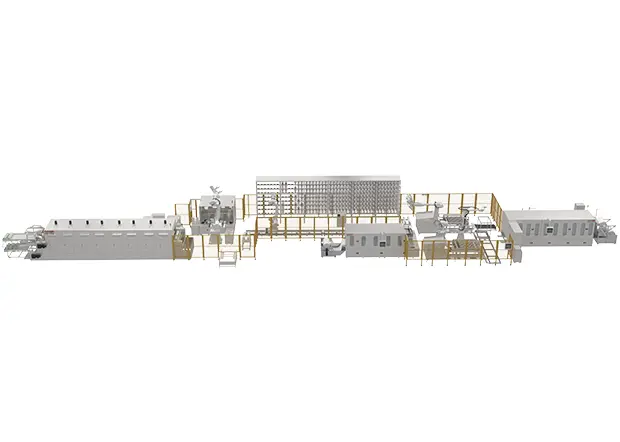
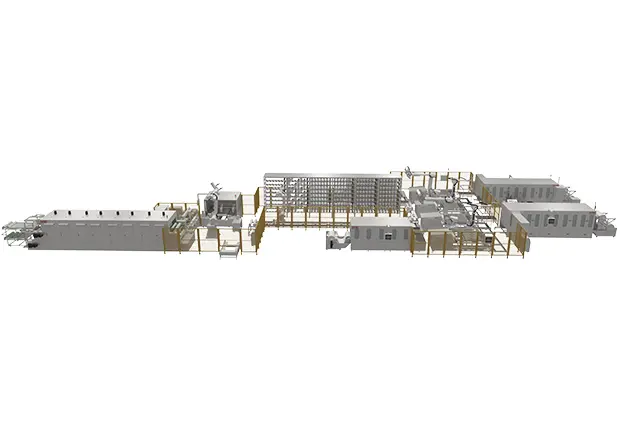
Lithium-ion battery manufacturing is not completed by a single machine. A production line usually combines several systems, each responsible for a specific process.
Depending on the battery format and production method, equipment may be used for coating electrodes, calendaring, slitting, stacking, winding, welding, electrolyte filling, sealing, formation, aging, or testing.
This means the term battery making machine can refer to individual production equipment or a complete integrated line.
For buyers, the first step is to identify which production stage needs automation or improvement before comparing machine models.
Battery making machines can be divided according to electrode preparation, cell assembly, finishing, and testing functions.
Common equipment categories include:
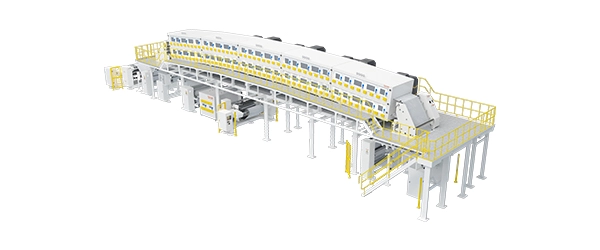
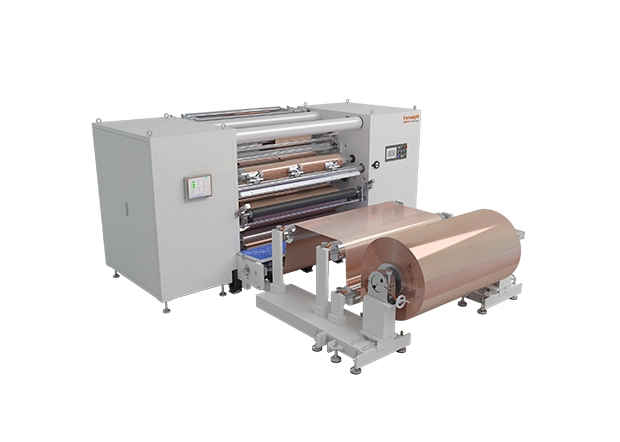
Electrode processing equipment: Used for mixing, coating, drying, calendaring, and slitting electrode materials.
Cell assembly machines: Support stacking, winding, tab welding, case insertion, and other assembly processes.
Electrolyte filling and sealing equipment: Used to introduce electrolyte and complete cell sealing under controlled conditions.
Formation and testing systems: Apply electrical cycles and measure battery performance before final acceptance.
Pack assembly equipment: Used when cells are combined into modules or battery packs.
The correct equipment configuration depends on whether the manufacturer produces cylindrical, prismatic, pouch, or another cell format.
A lithium ion battery making machine should therefore be evaluated as part of the entire production workflow rather than as an isolated machine.
Lithium battery making machines are used across cell manufacturing, module production, and battery pack assembly for energy storage, electric vehicles, consumer electronics, and industrial applications.
Battery production requirements vary according to the final application. Cells for electric vehicles may require high throughput and strict traceability, while pilot lines may prioritize flexibility and smaller batch sizes.
Production equipment may support applications such as:
EV battery manufacturing: High-volume lines require automation, process stability, and reliable quality control.
Energy storage batteries: Production may focus on large-format cells and consistent long-term performance.
Consumer electronics: Smaller cells often require high precision and compact production processes.
Research and pilot production: Flexible equipment allows manufacturers to test new materials and battery designs before scaling.
The intended application should influence equipment capacity, process control, automation level, and inspection requirements.
Choosing a lithium battery making machine requires matching the equipment's process capability, production capacity, accuracy, and automation level with the manufacturer's product and factory requirements.
Important selection factors include:
Battery format: Confirm whether the machine supports cylindrical, pouch, prismatic, or other battery designs.
Production capacity: Machine throughput should match planned output without creating bottlenecks elsewhere in the line.
Process accuracy: Coating thickness, alignment, welding, filling, and other parameters may require tight control.
Automation level: Manual, semi-automatic, and fully automatic systems provide different balances between flexibility and productivity.
Integration capability: Equipment should communicate and operate effectively with upstream and downstream machines.
Buyers should also review maintenance requirements, spare parts availability, operator training, software functions, and after-sales support.
Battery making equipment should be selected according to the complete production process rather than purchasing individual machines without considering line balance.
A common mistake is to select equipment based only on the maximum speed of each machine. In practice, the overall line is limited by the slowest process.
Manufacturers should map the complete production flow and identify target output at each stage. Cycle time, buffer capacity, material handling, inspection, and rework requirements should be included in the evaluation.
Pilot projects may benefit from flexible machines that can handle different products, while large-scale factories usually prioritize automation and repeatability.
FST Global supports customers in evaluating battery production requirements and selecting suitable equipment configurations according to process needs and production goals.
FST Global provides lithium battery manufacturing equipment and production solutions for customers requiring different cell formats, process stages, and automation levels.
For equipment procurement, buyers should clearly communicate battery type, target capacity, production process, available factory space, automation requirements, and quality-control expectations.
This information helps determine whether a single machine, production module, or more complete manufacturing solution is appropriate.
FST Global supports customers with battery production equipment designed for different manufacturing requirements, from individual process machines to broader production-line applications.
A lithium battery making machine is a key part of modern battery manufacturing, but successful production depends on how multiple machines work together across the full process.
Manufacturers should evaluate battery format, production capacity, process accuracy, automation, integration, maintenance, and technical support before making a purchase.
Whether the goal is pilot production or large-scale manufacturing, choosing suitable battery making equipment can improve consistency, efficiency, and production reliability. FST Global provides battery production solutions for customers with different manufacturing and automation requirements.
It is equipment used in one or more stages of lithium-ion battery production, such as electrode processing, cell assembly, filling, sealing, formation, testing, or pack assembly.
The exact equipment depends on battery format, but common machines include mixers, coaters, calendaring machines, slitters, stackers or winders, welding equipment, filling machines, sealing systems, and formation equipment.
Usually no. Lithium battery production requires multiple machines working across different manufacturing stages.
Consider battery type, production capacity, required process accuracy, automation level, integration, maintenance, and after-sales support.
Pilot equipment usually prioritizes flexibility and smaller batches, while mass-production equipment focuses on higher throughput, automation, and repeatability.
Customization may be possible depending on battery format, process requirements, production capacity, factory layout, and equipment manufacturer capabilities.
This is the first one.