English

A battery slitting machine is used to convert wide rolls of battery materials into narrower rolls with controlled width, edge quality, and winding characteristics. In lithium-ion battery manufacturing, this process is important because separators and metal foils must be prepared for downstream winding or stacking. Slitting performance can influence material utilization, production consistency, and the reliability of subsequent operations.
Selecting the right slitting machine requires more than checking its maximum speed. Material type, thickness, width tolerance, tension control, cutting method, and automation all affect whether equipment can meet a production line’s requirements.
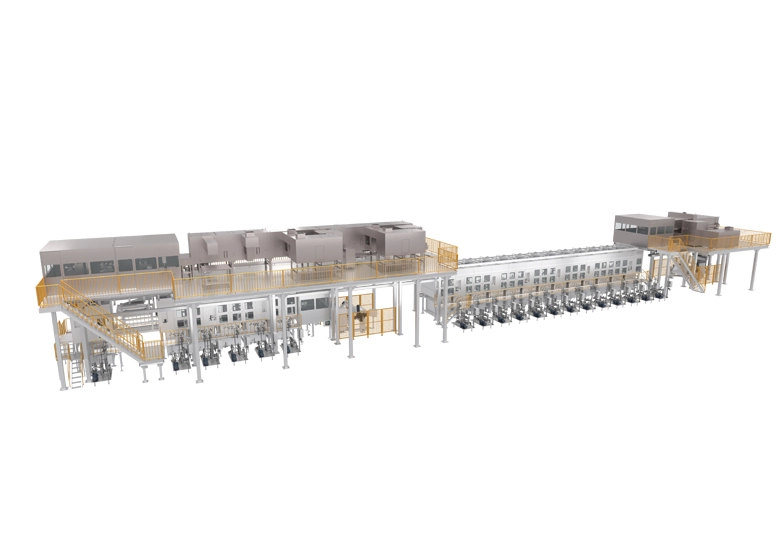
A battery slitting machine is an industrial converting system that unwinds a large material roll, cuts it into narrower strips, and rewinds the finished strips into separate rolls. Depending on the production process, the substrate may be lithium battery separator film, copper foil, or aluminium foil.
The machine generally combines unwinding, web guiding, tension control, slitting tools, and rewinding units. Some systems also include automatic tool positioning, inspection functions, and control software to support repeatable operation. The specific configuration depends on the substrate and required output.
A lithium battery slitting machine must handle thin, sensitive materials without introducing unacceptable edge defects, wrinkles, contamination, or winding irregularities. Separator film and metal foils have different mechanical characteristics, so one configuration should not automatically be assumed suitable for every material.
Slitting typically takes place after a material has been produced in a wide roll and is ready to be converted into the widths needed for subsequent manufacturing. The finished rolls must be dimensionally consistent and suitable for handling by downstream equipment.
The main stages include:
Unwinding and alignment: The parent roll is mounted and fed into the machine. Web-guiding systems help keep the material aligned along its travel path.
Tension control: Controlled tension helps reduce slack, stretching, wrinkles, or instability as the material moves through the line.
Slitting: Blades divide the wide web into narrower strips. Tool selection and positioning depend on material properties and edge-quality requirements.
Rewinding: Individual strips are wound into rolls with suitable alignment and winding tension for storage or further processing.
Inspection: Operators or integrated systems check dimensions, edges, roll appearance, and other criteria defined by the production specification.
Slitting quality should be assessed alongside the condition of the incoming material. Defects already present in a parent roll may affect the finished product even when the slitting machine is operating correctly.
Slitting equipment can be categorized by the material being processed and by its cutting and automation configuration. In lithium-ion battery production, specialized machines are commonly used for copper foil, aluminium foil, and separator film.
| Machine type | Typical substrate | Main selection priority |
|---|---|---|
| Copper foil slitting machine | Battery copper foil | Stable handling and edge quality |
| Aluminium foil slitting machine | Battery aluminium foil | Cutting consistency and material control |
| Separator slitting machine | Lithium battery separator film | Low-tension handling and winding quality |
| General roll slitting machine | Various roll materials, depending on configuration | Compatibility with the specified substrate |
FST Global offers intelligent slitting equipment for LIB copper foil, aluminium foil, and separator foil. The correct model should be selected according to the material specification, required slit width, roll dimensions, and downstream process.
Slitting results depend on several interacting factors. Blade condition, cutting geometry, material properties, tension settings, alignment, and rewinding parameters can all influence the finished rolls. Inadequate control may lead to uneven edges, wrinkles, telescoping rolls, particles, or inconsistent widths.
Buyers should evaluate:
Material characteristics: Confirm substrate thickness, mechanical behavior, width, and incoming roll quality.
Precision requirements: Define acceptable width deviation and edge condition based on downstream needs.
Tension and alignment: Check whether the control system can maintain stable handling across the intended operating range.
Automation and inspection: Assess tool positioning, parameter control, alarms, and quality data functions where required.
Integration: Confirm compatibility with existing production workflows, roll handling, and quality procedures.
A machine’s advertised speed should be evaluated alongside its ability to maintain acceptable quality under the intended operating conditions.
A battery slitting machine is a key part of lithium-ion material preparation, converting wide rolls into narrower rolls for downstream production. Choosing the right slitting machine requires attention to substrate compatibility, width precision, tension control, edge quality, winding performance, and automation. Manufacturers should define these requirements before comparing equipment models and confirm that the selected system is suitable for the actual production process.
It cuts wide rolls of battery materials into narrower rolls with specified widths and winding characteristics for later manufacturing stages.
Depending on its configuration, it may process copper foil, aluminium foil, or lithium battery separator film. Compatibility must be confirmed for the specific model.
Stable tension helps reduce wrinkles, stretching, alignment problems, and winding defects during material conversion.
Material properties, blade condition, alignment, tension control, tool positioning, and machine configuration can all affect dimensional consistency.
Compare substrate compatibility, width range, roll dimensions, precision requirements, automation, inspection functions, and integration needs.
No. Practical productivity also depends on changeover time, material waste, defect rates, uptime, and whether the machine maintains required quality at operating speed.
This is the first one.