English

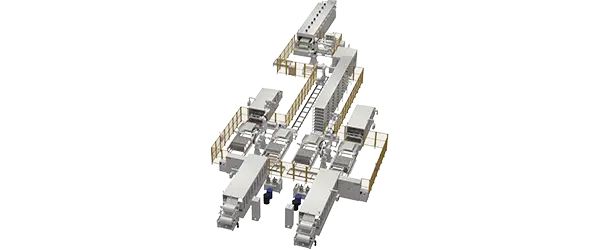
A battery production line is an integrated manufacturing system that converts battery raw materials into finished cells through a sequence of controlled processes. For lithium-ion battery manufacturers, line design directly affects material consistency, production efficiency, quality control, traceability, and the ability to scale output.
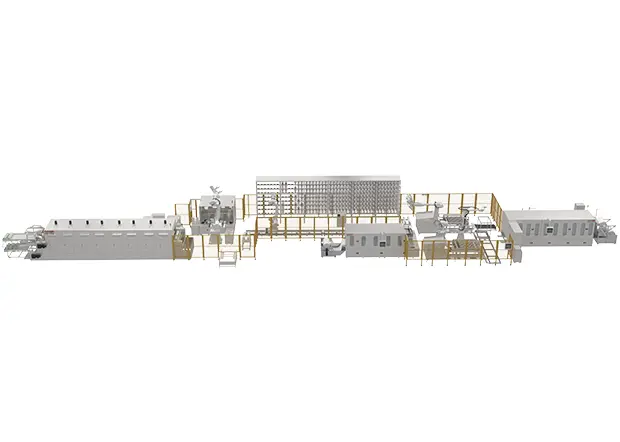
Unlike a single battery making machine, a complete production line connects multiple processes such as material preparation, coating, drying, calendaring, slitting, cell assembly, electrolyte filling, formation, and testing. The performance of each stage can influence the next, so manufacturers need to evaluate the entire process rather than individual machines in isolation.
Foresight Tech develops intelligent lithium-ion battery manufacturing equipment for critical material-processing stages, including separator coating and precision slitting of copper foil, aluminium foil, and separator film.
A battery production line is a coordinated system of machines, material-handling equipment, inspection devices, and control software used to manufacture batteries through sequential production stages.
A modern battery production line normally begins with electrode and separator preparation. Active materials are processed and coated onto current collectors, while separator film may receive functional coatings according to the battery design. These materials then pass through drying, calendaring, slitting, inspection, and rewinding before entering cell assembly.
The exact line configuration depends on whether the manufacturer produces cylindrical, pouch, or prismatic cells. Production capacity, substrate specifications, automation level, factory layout, and quality targets also influence equipment selection.
For battery manufacturers, the key objective is not simply achieving the highest machine speed. A well-designed production line should maintain stable material flow, accurate dimensions, consistent tension, reliable inspection, and repeatable process parameters from one stage to the next.
The main steps in a battery production line include material preparation, electrode and separator processing, cell assembly, electrolyte processing, formation, and final testing.
The typical production flow includes:
Material preparation and coating: Active or functional materials are mixed and applied to copper foil, aluminium foil, or separator substrates under controlled conditions.
Drying, calendaring, and slitting: Coated materials are dried and processed to achieve required thickness and width specifications.
Cell assembly: Electrodes and separators are wound or stacked, followed by tab welding and packaging.
Electrolyte filling and sealing: Electrolyte is introduced into the cell before controlled sealing.
Formation, aging, and testing: Finished cells undergo electrical activation, aging, grading, and quality verification.
Upstream material quality is especially important. If coating uniformity, slitting accuracy, or roll tension is unstable, downstream winding and stacking processes may experience alignment or feeding problems.
This is why an efficient battery production line depends on consistent performance across every stage rather than relying on one high-performance lithium battery manufacturing machine.
Lithium battery manufacturing requires specialized machines for coating, material converting, cell assembly, electrolyte processing, and quality testing.
| Production Stage | Typical Equipment | Key Manufacturing Requirement |
|---|---|---|
| Material preparation | Mixing and coating machines | Coating consistency and stable web handling |
| Electrode converting | Calendaring and slitting equipment | Width accuracy, edge quality and tension |
| Separator processing | Coating and separator slitting machines | Cleanliness, low tension and dimensional control |
| Cell assembly | Winding/stacking and welding machines | Positioning accuracy and repeatability |
| Final processing | Filling, formation and testing equipment | Cell consistency and traceability |
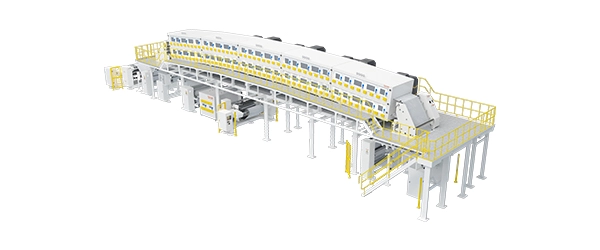
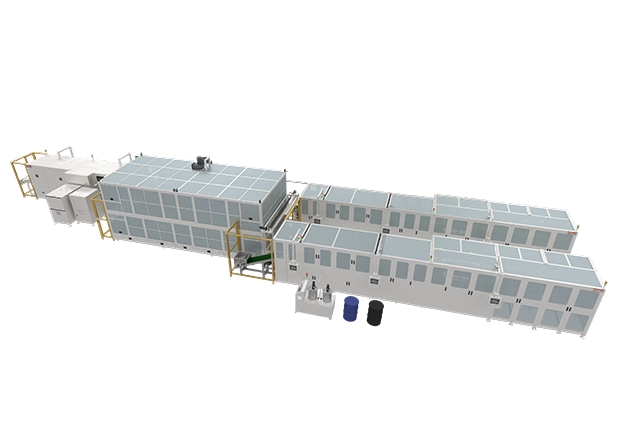
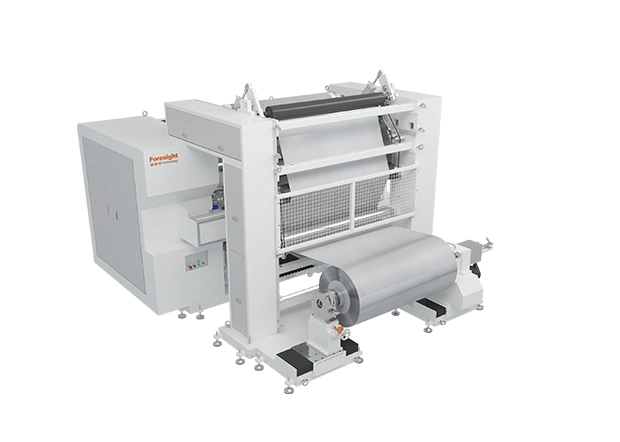
Coating and slitting are particularly important because they determine the condition of materials entering cell assembly. Foresight Tech's intelligent LIB separator coating machine integrates coating, drying, web handling, inspection, and process control for separator manufacturing.
Precision converting is equally critical. Its intelligent copper foil slitting machine is designed for thin battery foil processing and provides slitting accuracy of up to ±0.1 mm, helping manufacturers control roll dimensions and edge consistency.
The correct battery making machine should therefore be selected according to substrate characteristics, required output, precision targets, and compatibility with adjacent production stages.
Automation improves a battery production line by increasing process repeatability, reducing manual intervention, improving traceability, and enabling faster detection of production abnormalities.
Modern battery factories increasingly integrate sensors, inspection systems, automatic tension control, recipe management, alarms, and production-data platforms. These technologies allow operators to monitor important process conditions in real time rather than relying only on final inspection.
The main benefits include:
More consistent coating, slitting, and material handling
Reduced dependence on manual adjustment
Faster identification of process deviations
Improved production data and traceability
Easier integration between upstream and downstream equipment
Automation is especially valuable when processing thin battery materials. Small variations in tension, alignment, or cutting conditions can create wrinkles, burrs, particles, or unstable winding. Intelligent control allows the battery production line to respond more consistently to these variables.
For manufacturers expanding capacity, automation also makes it easier to coordinate multiple machines and standardize production across different shifts or production lines.
In conclusion, an effective battery production line should combine suitable lithium battery manufacturing machines with stable process control, accurate material handling, inspection, and automation. Foresight Tech focuses on intelligent coating and slitting technologies that help battery manufacturers improve material consistency and create a stronger foundation for downstream cell production.
A battery production line is an integrated manufacturing system that connects equipment for material preparation, coating, slitting, cell assembly, electrolyte processing, formation, and testing.
Common machines include mixers, coating machines, drying systems, calendaring equipment, slitting machines, winding or stacking equipment, welding machines, filling systems, and formation and testing equipment.
A lithium battery manufacturing machine performs a specific production process such as coating, slitting, winding, stacking, welding, electrolyte filling, or testing.
Coating controls material-layer consistency, while slitting controls final roll width, edge quality, and winding condition before materials enter cell assembly.
Automation improves repeatability, process monitoring, quality control, traceability, and coordination between different manufacturing stages.
Foresight Tech provides intelligent lithium-ion battery equipment focused on separator coating and precision slitting of copper foil, aluminium foil, and separator materials.