English

Battery manufacturing equipment includes the specialized machines used to prepare battery materials, process electrodes and separators, assemble cells, and support downstream testing and quality control. For lithium-ion battery producers, equipment performance directly affects coating consistency, material utilization, edge quality, production efficiency, and overall process stability.
As battery factories move toward higher automation and tighter manufacturing tolerances, choosing suitable lithium battery manufacturing equipment becomes increasingly important. Manufacturers must consider not only production speed but also material compatibility, tension control, inspection capability, automation, and process integration.
Foresight Tech focuses on intelligent equipment for critical lithium-ion battery material-processing stages, including separator coating systems and precision slitting equipment for copper foil, aluminium foil, and separator materials.
Battery manufacturing equipment refers to the industrial machinery used to process battery materials and manufacture battery cells through controlled coating, drying, slitting, assembly, formation, and testing processes.
Lithium-ion battery production involves multiple connected stages. Electrode materials must first be mixed and coated onto current collectors such as copper or aluminium foil. After drying and calendaring, these materials are slit into precise widths before being transferred to winding or stacking operations. Separator materials may also require coating, drying, inspection, and slitting before cell assembly.
Because these materials are thin and highly sensitive to wrinkles, particles, burrs, and tension variations, modern battery manufacturing equipment must provide precise web handling and consistent process control.
For buyers comparing battery manufacturing equipment suppliers, it is therefore important to look beyond machine specifications and evaluate how well the equipment fits the complete production workflow.
The main machines used in battery production perform different functions across electrode preparation, separator processing, cell assembly, electrolyte processing, and final testing.
| Production Stage | Typical Equipment | Main Purpose |
|---|---|---|
| Material preparation | Mixing, coating and drying machines | Apply and stabilize functional materials |
| Electrode processing | Calendaring and slitting machines | Control thickness, width and roll quality |
| Separator processing | Coating and separator slitting equipment | Improve separator functionality and dimensional consistency |
| Cell assembly | Winding/stacking, welding and packaging machines | Combine electrodes and separators into cells |
| Final processing | Electrolyte filling, formation and testing systems | Complete and verify battery performance |
The performance of downstream equipment depends heavily on upstream material quality. For example, inaccurate foil slitting can introduce burrs or uneven edges, while unstable separator coating may affect subsequent winding or stacking.
Foresight Tech provides lithium-ion battery manufacturing equipment focused on these critical material-processing stages, helping manufacturers improve consistency before materials enter cell assembly.
Battery coating machines apply controlled layers of functional material onto electrode foil or separator substrates and are essential for achieving repeatable surface quality and downstream process stability.
Coating equipment may be used for electrode processing as well as lithium-ion battery separator production. Depending on the material and application, manufacturers need to control coating width, coating method, drying conditions, web tension, and inspection accuracy.
Typical coating applications include:
Battery separator coating: Functional materials are applied to separator film to achieve specific surface characteristics and production requirements.
Electrode coating: Active material slurry is applied to copper or aluminium foil before drying and further processing.
Precision web handling: Stable tension and alignment help reduce wrinkles and coating deviation.
Online inspection: Automated monitoring helps identify defects and maintain process consistency.
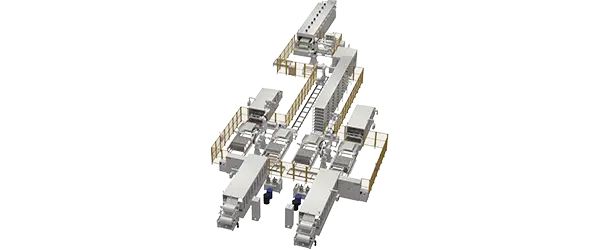
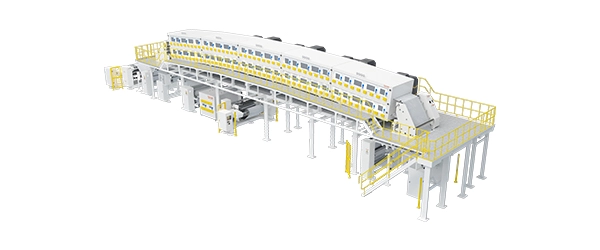
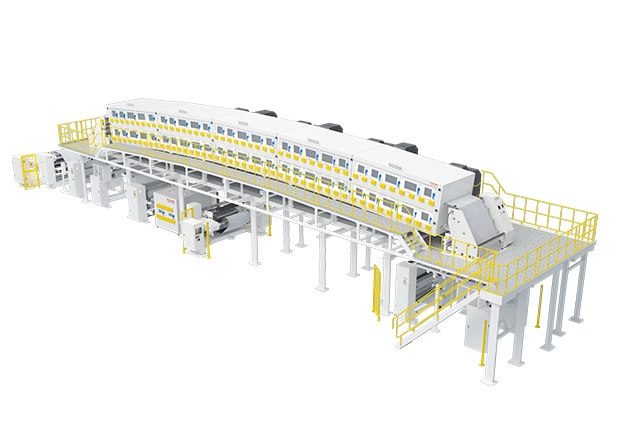
Foresight Tech's intelligent LIB separator coating machine supports roller coating, spray coating, and spot coating. Its system integrates coating, drying, web handling, inspection, and intelligent control to support different production requirements.
When evaluating battery manufacturing equipment, buyers should therefore compare coating accuracy and stability rather than focusing only on maximum production speed.
Battery slitting equipment converts wide rolls of copper foil, aluminium foil, or separator film into narrower rolls with controlled dimensions, edge quality, and rewinding tension.
Slitting is a critical converting process because the finished roll must meet downstream winding or stacking requirements. Poor slitting performance can cause burrs, particles, uneven edges, winding defects, or dimensional inconsistency.
Copper foil is particularly thin and requires precise cutting and stable tension control. Foresight Tech's intelligent copper foil slitting machine is designed for battery copper foil processing and lists slitting accuracy of up to ±0.1 mm.
Aluminium foil production may require higher operating speeds while still maintaining stable edge quality. Separator film has different handling requirements because low tension, cleanliness, and wrinkle prevention are especially important.
For these reasons, lithium battery manufacturing equipment should be selected according to the actual substrate. One slitting configuration may not be suitable for every foil or separator application.
A reliable supplier should understand the relationship between material thickness, machine speed, blade configuration, tension control, dust removal, and rewinding. This process knowledge is often as important as the machine itself when manufacturers evaluate battery manufacturing equipment suppliers.
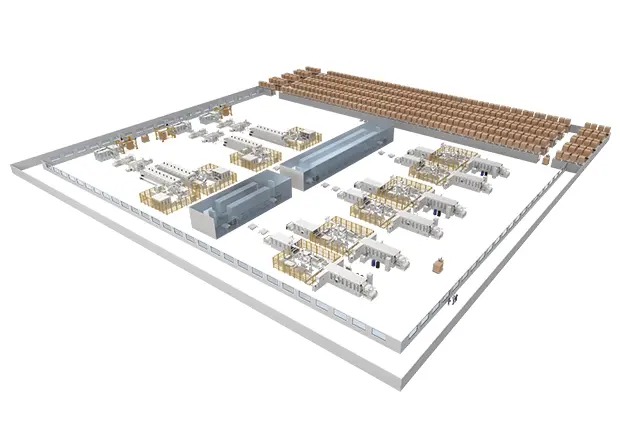
Selecting the right battery manufacturing equipment requires looking at the production line as a connected system. Coating quality affects material consistency, slitting quality affects downstream handling, and stable automation helps maintain repeatable production.
Foresight Tech develops intelligent coating and slitting solutions for lithium-ion battery material processing, helping battery manufacturers improve production consistency, material handling, and process automation.
Battery manufacturing equipment is used for processes such as mixing, coating, drying, calendaring, slitting, winding or stacking, welding, electrolyte filling, formation, and testing.
Typical lithium battery manufacturing equipment includes coating machines, drying systems, calendaring equipment, slitting machines, cell assembly machines, electrolyte filling systems, and formation and testing equipment.
A battery coating machine controls how functional materials are applied to electrode or separator substrates. Stable coating helps improve consistency before downstream manufacturing.
Battery slitting equipment cuts wide rolls of copper foil, aluminium foil, or separator material into required widths while controlling edge quality and rewinding tension.
Manufacturers should compare process experience, material compatibility, equipment precision, automation, inspection capabilities, technical support, and the ability to integrate equipment into the production line.
Foresight Tech provides intelligent battery manufacturing equipment focused on lithium-ion battery separator coating and precision slitting of copper foil, aluminium foil, and separator materials.