English

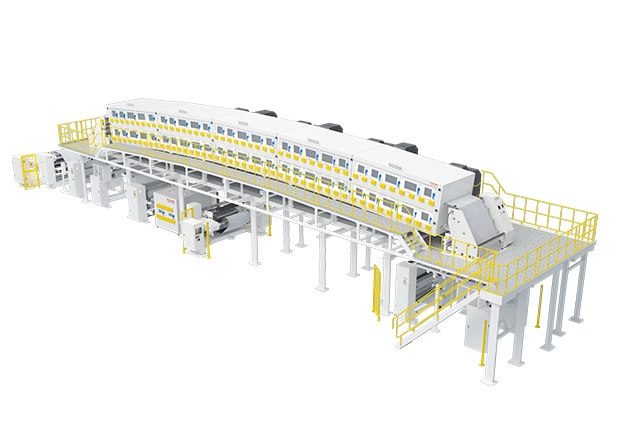
A battery coating machine is one of the key pieces of equipment in lithium-ion battery electrode manufacturing. It applies prepared electrode slurry onto a current collector with controlled thickness and loading before the coated foil enters drying and downstream processes. For manufacturers, coating consistency directly affects electrode quality, material utilization, production stability, and subsequent cell manufacturing.
Choosing suitable equipment therefore requires more than comparing maximum coating speed. Buyers should evaluate coating method, web width, coating accuracy, slurry characteristics, drying capacity, tension control, automation, and compatibility with the rest of the production line.
FST Global provides battery manufacturing equipment solutions for pilot-scale and production-scale requirements, helping manufacturers configure equipment around their actual electrode process.
A battery coating machine is important because it determines how consistently active electrode material is deposited across the current collector during electrode production.
In conventional lithium-ion battery manufacturing, cathode slurry is generally coated onto aluminum foil, while anode slurry is generally applied to copper foil. The coating must remain sufficiently uniform across the required width and along the length of the electrode.
Variations in coating thickness or loading can create inconsistencies between electrode areas. These differences may continue into calendaring, slitting, cell assembly, and final battery production.
A suitable lithium battery coating machine must therefore control multiple variables simultaneously. Slurry delivery, coating conditions, web movement, tension, and drying need to operate as one coordinated process rather than as independent functions.
For production-line buyers, stable and repeatable coating is generally more valuable than maximum machine speed alone.
The most important battery coating machine parameters include coating width, coating accuracy, web speed, tension control, drying capability, and compatibility with the electrode slurry.
Manufacturers should pay particular attention to:
Coating width and foil dimensions: The equipment must accommodate the required electrode and current-collector specifications.
Coating accuracy: Thickness and loading consistency should meet the requirements of the specific electrode design.
Production speed: Web speed should be coordinated with slurry delivery and available drying capacity.
Tension and alignment control: Stable foil movement helps maintain coating position and reduce web-handling problems.
Drying capability: Drying conditions must match the coating formulation, solvent system, coating loading, and production speed.
Automation should also be considered. Depending on the production line, functions such as recipe management, automatic tension adjustment, process monitoring, and inspection can help improve consistency and reduce operator dependence.
When comparing equipment quotations, manufacturers should evaluate these parameters together rather than selecting a machine based on one headline specification.
The slurry coating process transfers a prepared mixture of active material and other formulation components onto the current collector before controlled drying.
The process begins with properly prepared slurry. Its rheological properties and stability can influence how consistently it flows through the coating system. The slurry is then delivered to the coating head and deposited onto the moving foil according to the required coating pattern and loading.
A slurry coating machine must maintain stable interaction between material delivery and web movement. If slurry supply fluctuates while web speed remains constant, coating uniformity can be affected. Likewise, unstable foil tension can influence alignment and coating position.
After application, the wet electrode enters the drying section. Drying needs to remove the liquid carrier under controlled conditions while maintaining the required electrode characteristics.
The dried electrode can then proceed to downstream manufacturing stages such as calendaring and slitting. This means coating performance should always be evaluated in relation to the complete electrode manufacturing process.
Battery coating quality can be improved by controlling slurry properties, coating parameters, web handling, drying conditions, and process monitoring throughout production.
Several practical areas deserve attention:
Maintain consistent slurry properties. Mixing, storage, and delivery conditions should minimize unwanted variation before coating.
Control web tension and alignment. Stable foil transport helps maintain coating position and reduces process variation.
Coordinate speed and drying. Increasing coating speed without sufficient drying capability can create downstream quality problems.
Monitor coating results. Appropriate inspection and measurement can help identify deviations before large quantities of material are processed.
Maintain critical machine components. Coating heads, rollers, tension systems, and drying equipment should remain in suitable operating condition.
Manufacturers using a thin film coating machine should also confirm whether its coating principle, precision, material compatibility, and production configuration are suitable for the specific battery electrode process. The general term “thin film coating” can cover technologies designed for very different materials and applications.
Selecting a battery coating machine requires matching equipment capability with electrode specifications, target output, factory conditions, and upstream and downstream production processes.
The first step is defining the product. Buyers should provide information about cell type, cathode and anode materials, foil specifications, required coating width, target loading, coating pattern, and expected output.
Production scale is another major consideration. R&D and pilot lines typically need greater process flexibility and easier parameter adjustment. Large-scale manufacturing generally places more emphasis on throughput, automation, repeatability, and integration.
Buyers should also examine how the coating machine fits into the complete production line. A high-speed coater offers limited value if slurry preparation, drying, calendaring, or other downstream processes cannot support the same output.
Technical support should therefore be part of the purchasing decision. Installation, commissioning, operator training, maintenance, spare parts, and process support can all influence long-term equipment performance.
FST Global supports battery manufacturers in selecting equipment according to electrode specifications, capacity targets, and production-line requirements.
A battery coating machine is a critical part of lithium-ion electrode manufacturing because it controls how electrode slurry is transferred onto the current collector before drying and downstream processing.
For manufacturers, equipment selection should focus on coating accuracy, web handling, production speed, drying capability, slurry compatibility, automation, and production-line integration. A suitable lithium battery coating machine should deliver the required process consistency while fitting the actual manufacturing capacity and electrode design.
FST Global provides battery manufacturing equipment solutions for customers developing pilot lines, production lines, and other lithium-ion battery manufacturing projects.
It is used to apply prepared electrode slurry onto current collector foil during lithium-ion battery electrode manufacturing.
In conventional lithium-ion manufacturing, cathode material is typically coated onto aluminum foil and anode material onto copper foil.
Important factors include slurry properties, coating settings, web tension, alignment, coating speed, drying conditions, and equipment stability.
No. Coating speed must be coordinated with slurry delivery, drying capacity, web handling, and downstream production requirements.
Compare coating method, width, accuracy, production speed, tension control, drying system, automation, slurry compatibility, and technical support.
It depends on the machine configuration and process requirements. Buyers should confirm compatibility with the required slurry, foil, coating dimensions, and electrode specifications.